How to Check if Your Website Is Slow Using a Free Google Tool

Most business owners never test their website speed. They open the site on their own phone or computer, see it eventually loads, and assume everything is fine. The problem is your customers may be having a completely different experience.
A website that feels “good enough” to the business owner might actually be frustrating visitors without anyone realizing it. Slow websites cost businesses leads every single day. People are impatient online. If a page drags, freezes, jumps around while loading, or takes too long to become usable, visitors leave.
The good news is Google gives you a free tool that shows exactly how your website performs.
The Free Tool Google Provides
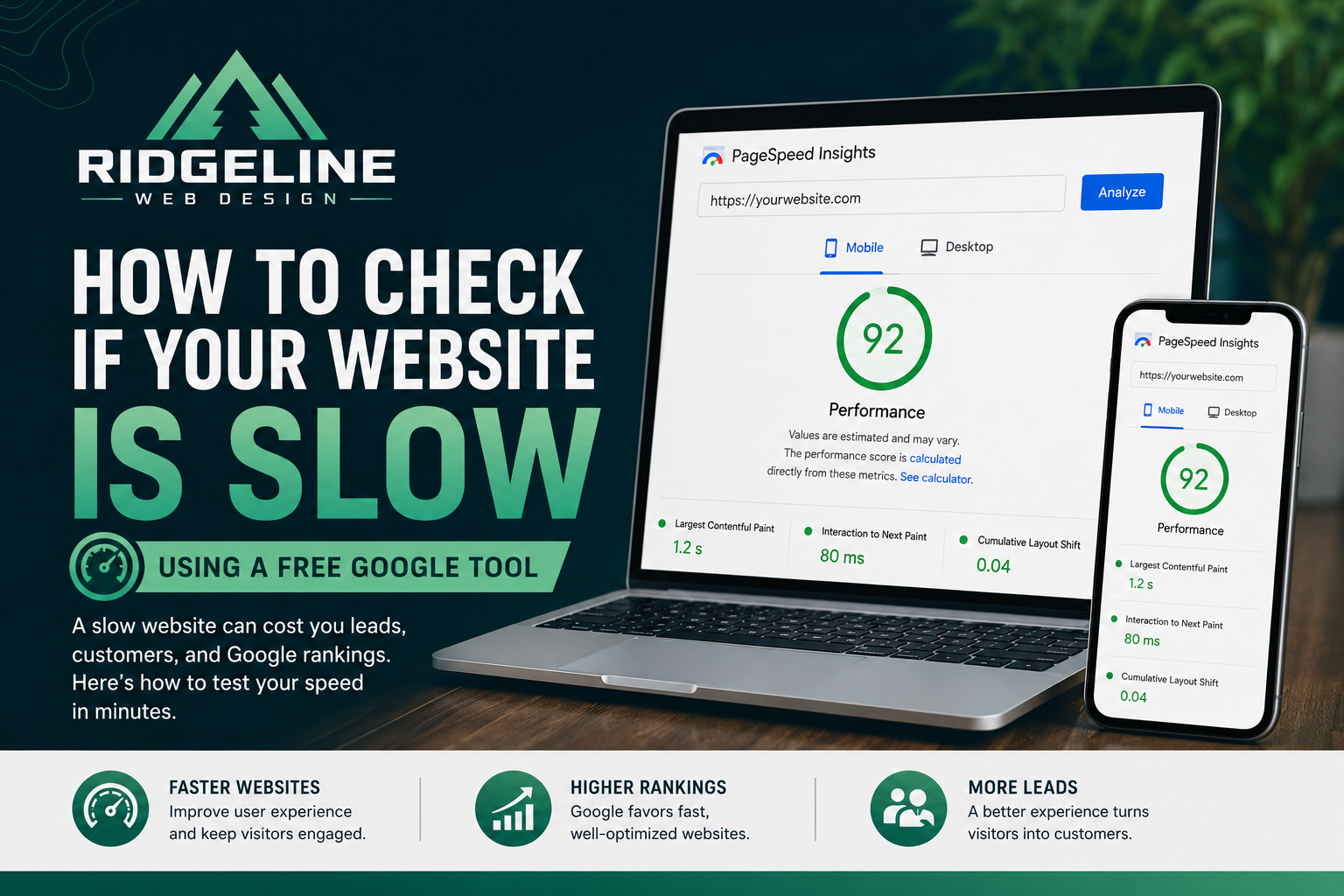
The tool is called Google PageSpeed Insights. You can find it here: Google PageSpeed Insights
All you do is paste your website URL into the search bar and run the test. Within a few seconds, Google gives you a full breakdown of your website’s performance on both mobile and desktop devices. The mobile score is usually the one that matters most because the majority of people browse websites from their phones now.
What the Scores Mean
Google scores your website from 0 to 100. The basic breakdown is as follows:
- 90 to 100 is considered good
- 50 to 89 needs improvement
- Below 50 usually means there are significant performance problems
A lot of small business websites score much lower than owners expect, especially websites built with heavy themes, page builders, or too many plugins. The score itself is not everything, but it does give a good overall picture of how optimized your site is and how well its performing for you (or not performing).
The Three Main Things to Watch
When you run the test, Google highlights several important areas, which are the Core Vitals.
Largest Contentful Paint
This measures how long it takes for the main part of the page to appear, or above the fold. If your website feels slow when first loading, this number is usually part of the problem. Google generally wants this under 2.5 seconds.
Cumulative Layout Shift
This measures how much the page jumps around while loading. You have probably experienced this before. You go to click something and suddenly the page shifts and you hit the wrong button instead. It creates a frustrating experience for visitors and can steer people away instantly.
Interaction to Next Paint
This measures responsiveness. Basically, it tells you how quickly the website reacts when someone taps, scrolls, or clicks. A sluggish website often feels unprofessional even if it looks visually nice. It not only needs to look clean, it needs to work smoothly too.
Why Website Speed Actually Matters
Some business owners think website speed only matters for technology companies or huge online stores. That is not true anymore. A slow website affects:
- User experience
- Google rankings
- Conversion rates
- Mobile usability
- Bounce rates
- Customer trust
People associate fast websites with professionalism. Slow websites create hesitation whether visitors realize it consciously or not. If somebody searches for a contractor, restaurant, landscaping company, or local service and one website loads instantly while another struggles to appear, people naturally gravitate toward the faster experience.
Common Reasons Websites Are Slow
There are a few things that cause most performance issues and common issues we see with a lot of websites.
- Large unoptimized images are one of the biggest problems. Many websites upload massive photos directly from phones or cameras without compressing them first.
- Too many plugins can also slow things down, especially on WordPress websites.Page builders often add excessive code and scripts that make pages heavier than they need to be.
- Cheap hosting is another common issue. Even a decent website can feel slow on overloaded servers.
Sometimes it is simply a combination of all of these things together and they all play a critical role in functionality of your site.
Don’t Obsess Over a Perfect Score
A lot of people panic if they do not get a perfect 100. That is not necessary. The goal is not chasing a screenshot score. The goal is creating a fast, smooth experience for actual visitors.
A website with a score in the 90s is already performing extremely well compared to most small business websites online. Improving real usability matters far more than trying to squeeze out every last point.
Final Thoughts
Checking your website speed only takes a couple minutes, and it can reveal problems you never realized existed. If your website feels slow, there is a good chance your visitors feel it too.
Sometimes small improvements make a noticeable difference. Faster load times can lead to more calls, more form submissions, and a better overall impression of your business. Remember, first impressions are beyond important.
And honestly, most small businesses are competing against websites that are poorly optimized anyway. A faster website alone can help you stand out more than people think.